Guides
Solar, explained with the numbers attached
Eighteen guides. Every figure is either computed from a stated model or quoted from a named source with the date it was checked, and where we do not have the data the page says so instead of estimating.
- Guides
- 19
- Topics
- 3
- Invented figures
- 0
The same 4 kWp roof, month by month. December delivers about 29% of what July does, which is the figure most estimates quietly average away.
- July
- 461 kWh
- December
- 134 kWh
- Ratio
- 3.4×
PVGIS 5.2 (European Commission JRC), PVGIS-SARAH2, 2005–2020. 4 kWp, roof-mounted, 14% system loss, Birmingham, UK.
Run it for your own locationStart here
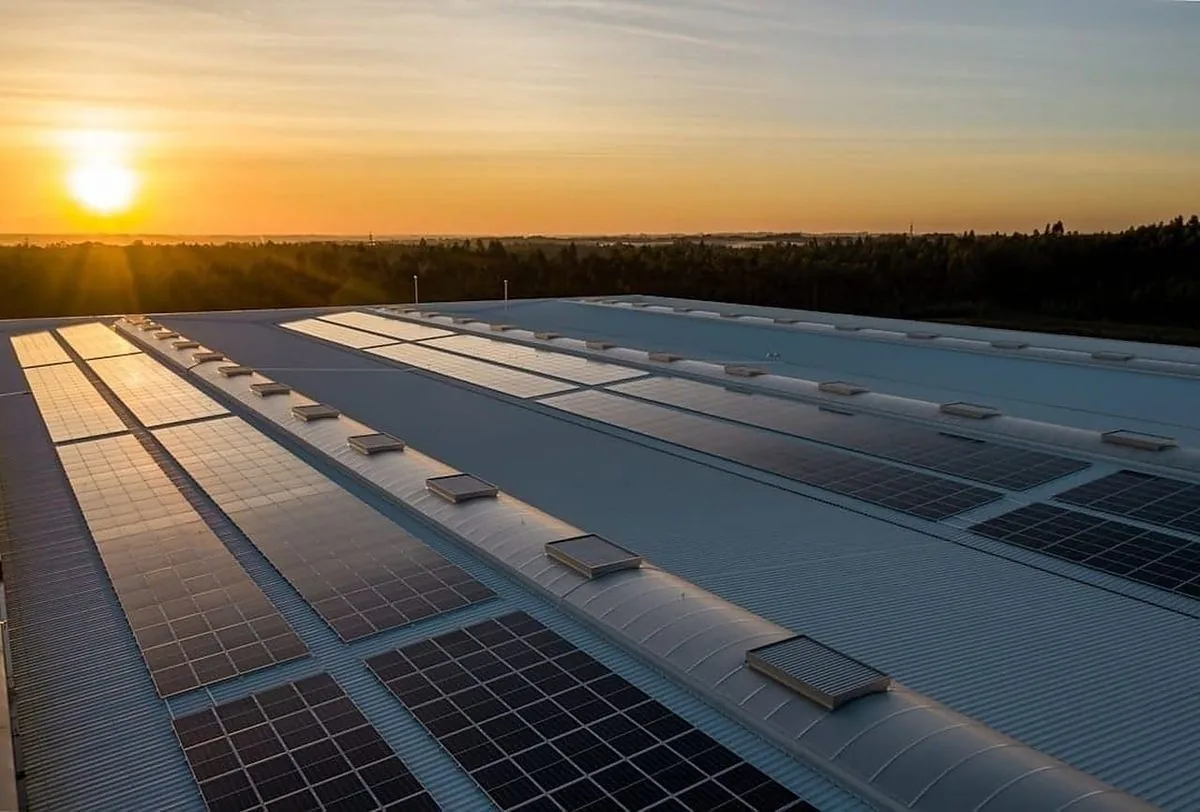
How solar actually performs
All 7What an array physically does on a roof, and why it delivers less than the quote said. Every figure in this section is modelled in PVGIS and the script that produces it ships with the site.

Performance11 min
Why your panels produce less than the quote said
A 4 kWp array does not deliver 4 kW. Between the irradiance landing on the glass and the kilowatt-hours reaching the meter sit five separate losses and one small gain, and they can be listed with numbers against them rather than described as inefficiency.
Read the guidePerformance9 min
Do solar panels work in shade, and how much do you lose
Panels keep producing in shade, from diffuse light. The expensive question is different: what one small opaque shadow does to the rest of the array. Bypass diodes decide the answer, and they work in thirds.
Performance9 min
How much output solar panels lose after 10, 15 and 25 years
Manufacturers warrant a straight line. Field measurements across 11,000 recorded degradation rates show a median close to that line and a mean well below it. The gap between those two numbers is where warranty claims live.
Performance8 min
Why solar panels produce less in a heatwave
A panel is rated at a cell temperature of 25°C. On a still, sunny day in the low thirties the cells sit near 60°C, and every degree above the rating costs output. The annual cost in Britain is modest. The cost at two in the afternoon in July is not.
Performance9 min
What 30° off south actually costs a solar array
Roof direction is treated as the thing that decides whether solar is worth doing. Modelled properly, 30° off south costs between two and three per cent a year, and any tilt between 25° and 50° is within about two per cent of the best one.
Straight answers8 min
When cleaning solar panels actually pays for itself
Cleaning is sold as maintenance. Treated as an investment, it has to recover its cost in extra kilowatt-hours, and in a climate with regular rain the number it has to recover is larger than the dirt is worth. There are three exceptions, and they are specific.
Roofs6 min
Why an east–west roof can beat a south-facing one
South-facing solar panels produce the most electricity over a year. East–west arrays produce less but spread generation across morning and afternoon, which can be worth more once exported units are paid at a fraction of retail price.
Equipment and buying decisions
All 6Inverters, warranties, batteries, and how to read a quote closely enough to tell whether it has modelled your house or a generic one.

Buying11 min
How to read a solar quote and spot an oversized system
A solar quote is a proposal with an embedded forecast, and the forecast rests on assumptions that are rarely written down. Six checks separate a quote that has modelled your house from one that has modelled a generic one and attached your address.
Read the guideBuying9 min
Microinverters or a string inverter: when each one wins
The argument is usually had about shading, which is the smaller half of it. The larger half is that one device is warranted for the life of the panels and the other is warranted for about half of it, and a replacement is a scaffolding job.
Buying9 min
What a 25-year solar warranty actually covers
A solar installation carries at least four separate warranties from at least three different parties, and they expire at different times. The 25-year figure on the front of the brochure is usually the one that pays out least.
Buying10 min
Whether you need a home battery, by consumption profile
A battery earns the gap between what you pay for a unit and what you are paid for one. That makes the deciding question how much electricity you use after dark, not how much your panels generate at noon.
Buying9 min
Home battery lifespan: rated cycles against real cycles
Batteries are sold on cycle counts running into the thousands. A solar-charged battery in Britain gets nowhere near that many in a decade, which means the cycle rating is almost never the thing that ends its life. The warranty term is.
Straight answers8 min
When a home battery is not worth buying
Home battery payback in the UK depends on your consumption, your export rate and the installed cost per kWh. Here are the three cases where solar battery storage does not recover its cost inside its warranty, and how to tell if yours is one of them.
What you are paid for export
All 6Three regimes we hold data for: the Smart Export Guarantee in Great Britain, the end of Dutch net metering, and California's net billing tariff. Nothing else, because a plausible summary of a rule we have not checked is the one mistake this site cannot afford.
Illustration for: Why a unit you use is worth more than a unit you export
Economics7 min
Why a unit you use is worth more than a unit you export
Self-consumed solar is paid at the retail price you avoid. Exported solar is paid at your SEG rate, a fraction of it. That gap decides what your panels earn, and it is what home battery storage is actually buying.
Read the guideRules9 min
Which SEG export rate is actually the best for you
The supplier at the top of an export league table is usually not the one that will pay you the most. Four conditions sit between the advertised rate and the money that reaches your account, and three of them are invisible on a comparison page.
Rules8 min
Dutch net metering ends on 1 January 2027
The salderingsregeling is abolished by a law that passed both chambers in 2024. There is no grandfathering: an array commissioned in 2019 and one commissioned in December 2026 both lose net metering on the same day. What replaces it is a supplier-set payment with a statutory floor until 2030.
Rules10 min
How US solar export payment works, state by state
There is no national answer, because net metering is set by states and utilities rather than by Washington. There are only three shapes a regime can take, and once you know which one covers you, your own tariff sheet becomes readable.
Rules8 min
What California NEM 3.0 pays for exported solar
Under the Net Billing Tariff, an exported kilowatt-hour is no longer worth the retail rate. It is worth whatever the Avoided Cost Calculator says it is worth in that specific hour of that specific month, and those values are lowest in the middle of a sunny day.
Work it out yourself
An estimate from published yield data with every step of the arithmetic on screen, so you can check it on paper.
Quick estimateThe full calculation
Six questions, and a range with the floor stated rather than one flattering number. You see it before we ask you for anything.
Start calculation